Capital of Chinese Lu Cuisine Welcomes Global Top Western Cuisine Contest – The "Olympics of the Culinary World" Lands in Yantai
Source: ifeng Shandong
Reporter: Zhang Chunliang
Correspondents: Guo Chuanyi, Jiang Qian
On April 11, the "Bocuse d'Or World Cooking Contest 2026 China Selection" was held in Yantai Huang-Bohai New Area. Honored as the "Olympics of the culinary world," this top-tier global Western cuisine contest crossed the Yangtze River for the first time, moving beyond its long-time base in South China and settling in Yantai in North China.
Inside the Bajiaowan International Convention and Exhibition Center, delicacies and their aromas wafted far and wide. Top Western chefs from across the country used Jiaodong seafood and local Yantai ingredients to complete culinary creations blending French flair with Eastern artistic conception within five hours.
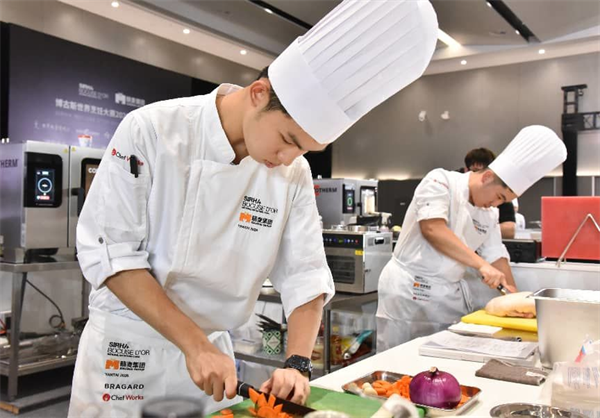
Founded in 1987, the Bocuse d'Or World Cooking Contest is held every two years. For many years, the China regional event had been rooted in South China. The choice of Yantai this time is the combined result of profound historical accumulation, unique resource endowment, and robust industrial strength.
As the core birthplace of Lu cuisine, the leading tradition among China's eight great culinary schools, Yantai is not only the Capital of Chinese Lu Cuisine but also produces nationally protected geographical indication products such as sea cucumbers, abalone, Yantai apples, and Laiyang pears, providing a natural foundation for top-level culinary creation. Liu Zexuan, Chairman of the Bocuse d'Or World Cooking Contest Executive Committee and Chairman of Xiaomai International Holding Group Co., Ltd., explained that to match the city's flavors, the competition required participating teams to use fresh local Yantai produce to customize and cook their dishes.
"Yantai seafood is fresh, sweet, and full of natural flavor, while the apples have a refreshing fragrance, and many other high-quality ingredients gave me the confidence to create," said the selection champion, Huang Junqi, who highly praised Yantai's fresh local produce. "Premium ingredients are the best seasoning; simple cooking techniques are enough to bring out their exquisite taste."
The contest's choice of Yantai is also inseparable from the solid strength of its Lu cuisine industry. On one hand, Yantai has established China's first Lu Cuisine Culture and Industry Standardization Research Institute, building a complete industrial ecosystem where the government, industry associations, leading enterprises, and professional institutions work in synergy. On the other hand, Yantai is a core hub for intensive food processing, marine ranch construction, and cold-chain logistics nationwide, providing full-chain industrial support for high-end culinary events.
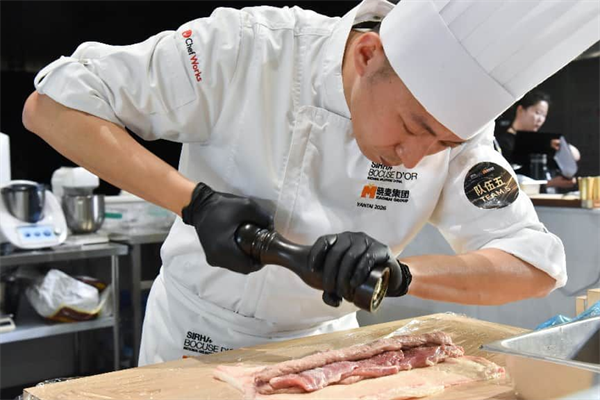
This contest transcends a mere cooking competition, becoming a key catalyst for Yantai's Lu cuisine culture to reach the world and engage in international dialogue. Liu Zexuan expressed the hope that the competition would enable young Chinese chefs, grounded in the millennium-old artistry of Lu cuisine, to deeply study the international standards and innovative concepts of French cooking. At the same time, it allows the global culinary community to appreciate Yantai Lu cuisine's cultural heritage, exquisite skills, and distinctive produce through the event, promoting the international expression of Chinese culinary culture and injecting Eastern inspiration into global gastronomic innovation.
Seizing the opportunity of the competition, the pace of industrial project implementation has also accelerated. At the platform level, Yantai Huang-Bohai New Area is making all-out efforts to build a highland for the Chinese food standardization industry and advancing the construction of the China (Yantai) International Food Valley Industrial Park. A 49,000-square-meter Chinese food standardization industry center has been completed, mainly targeting overseas export markets and expected to be operational by June this year.
At the enterprise level, as the core force for Chinese food standardization in the area, Xiaomai Group has also joined with Dadong, Le Cordon Bleu, and other institutions to complete the standardized transformation of over 1,800 dishes, and is accelerating the landing of the Dadong Sea Cucumber and Abalone Factory while steadily advancing the Le Cordon Bleu cultural tourism project. A cluster of high-end culinary industry projects is taking shape and gaining momentum in the Huang-Bohai New Area.
The impact of the Bocuse d'Or contest extends beyond the culinary industry, providing powerful momentum for expanding and upgrading the service sector, which resonates strongly with Yantai's city strategy. In its "15th Five-Year Plan," Yantai has proposed vigorously developing modern services and promoting the expansion and quality improvement of the service sector. Yantai Huang-Bohai New Area has also introduced supportive policies to foster high-quality and efficient development of the service industry.
"This competition is not only an important window to spread the good name of Yantai's cuisine and enhance the city's international image, but also a rare opportunity to drive the local catering industry to benchmark against international standards and upgrade," said an official from the Commerce Bureau of Yantai Huang-Bohai New Area. During the event, they specially organized key catering enterprises and related associations from across the city to observe the competition on site and set up a dialogue platform between Lu cuisine culture and Western cooking techniques to promote in-depth exchanges in concepts, techniques, and dish innovation. This aims to help the overall development of the catering industry and accelerate the standardization and industrialization of Chinese cuisine. At the same time, they are promoting the deep integration of cuisine with cultural tourism, commerce, the digital economy, and other formats to enrich new consumption scenarios and cultivate new service models, with the food economy helping to expand, upgrade, and drive high-quality development of the service sector.
One Bocuse d'Or event allows the world to unveil Yantai's flavors, industries, and vision. Empowering industries through the competition, energizing the city through industries, and connecting with the world through culture—riding the wave of this "Olympics of the culinary world," Yantai is carving out a uniquely distinctive path of advancement in high-end industry agglomeration, city brand internationalization, and regional economic upgrading.